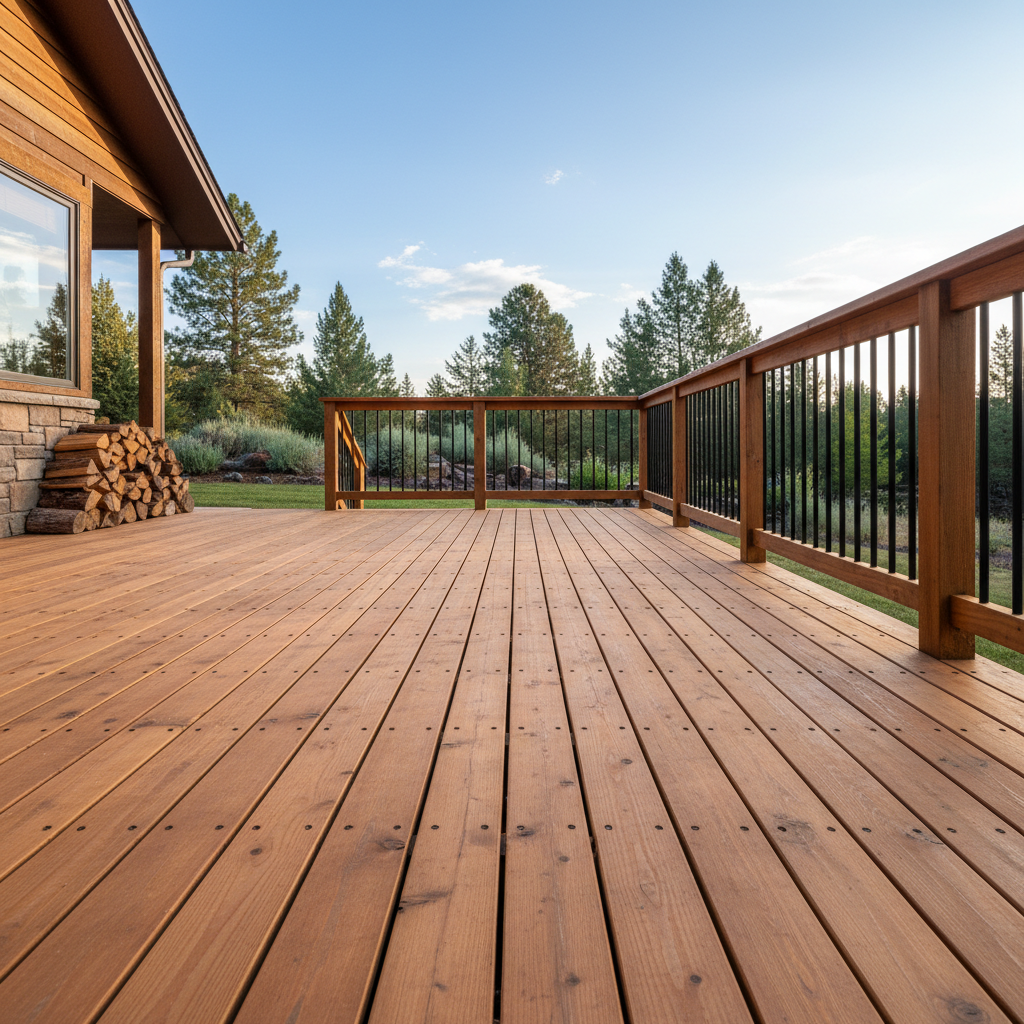
You've got a deck, right? Maybe I built it for you, or maybe it was there when you bought the place. Either way, you want it to last. Here in Bend, our weather can be brutal on outdoor structures – hot, dry summers, freezing winters, and that intense high-desert sun. It's not like the coast where things just get damp; we deal with extreme temperature swings and UV radiation that'll really put a deck through its paces. Good maintenance isn't just about looks; it's about protecting your investment and keeping your family safe.
Regular Maintenance: Your Deck's Best Friend
Think of your deck like your car; it needs regular check-ups. The biggest thing you can do is keep it clean. Twice a year, usually in the spring after the snow melts and again in the fall before winter sets in, give it a good scrub. Use a deck cleaner – nothing too harsh – and a stiff brush. Get rid of all that dirt, pollen, and any mold or mildew that's trying to get a foothold. For composite decks, a simple wash with soap and water usually does the trick. For wood, you might need a dedicated deck brightener to restore its color.
Sealing or staining is crucial for wood decks, especially with our dry climate. You're fighting against that UV radiation and moisture absorption. I generally recommend re-sealing or re-staining every 1-3 years, depending on the product you use and how much sun exposure your deck gets. If your deck is facing south and bakes in the sun all day, you'll probably be on the shorter end of that timeline. A good test is to sprinkle some water on the deck; if it soaks in instead of beading up, it's time to reseal. Don't forget the railings and stairs – they take a beating too.
Warning Signs You Can't Ignore
Your deck will tell you when it's hurting, if you know what to look for. Here are some red flags:
- Loose Fasteners: Walk around and really look at the screws and nails. Are any popping up? Are boards wobbly? This is a safety issue. Tighten screws or replace rusted ones.
- Rot or Soft Spots: Grab a screwdriver and poke around in areas prone to moisture, like near downspouts, where planters sit, or around the base of posts. If the wood feels soft or spongy, that's rot. It's not going to get better on its own.
- Cracked or Splintered Boards: Small cracks are normal with wood, but deep, long cracks can compromise strength. Splinters are also a hazard.
- Fading or Peeling Finish: This isn't just cosmetic. It means your deck's protection against the elements is failing.
- Wobbly Railings or Posts: Grab a railing and give it a good shake. If it moves more than an inch or two, it's not secure. This is a major safety concern.
- Stains or Discoloration: Dark spots could be mold, mildew, or even water damage indicating a leak somewhere.
- Pest Infestation: Keep an eye out for sawdust piles, tunnels, or actual bugs. Termites and carpenter ants love damp wood.
Our freeze-thaw cycles here in Bend can exacerbate these issues. Water gets into tiny cracks, freezes, expands, and then thaws, making those cracks bigger. It's a constant battle.
When to Call a Pro (That's Me!)
Look, I'm all for DIY, but some things are best left to the experts. If you see any of those serious warning signs – significant rot, structural issues, or really wobbly railings – don't mess around. Here's when you should definitely give Bend Deck Creations a call:
- Extensive Rot: If you've got rot in support beams, joists, or multiple deck boards, that's beyond a simple patch job. It affects the whole deck's integrity.
- Structural Problems: Any issues with the ledger board (where the deck attaches to your house), support posts, or footings require professional assessment. This is where things get dangerous if not handled correctly.
- Major Railing or Stair Repairs: If an entire section of railing is loose or a stair stringer is failing, it's a job for someone who knows the codes and how to properly secure things.
- Deck Age: If your deck is pushing 15-20 years old, it might be time for a thorough inspection. Even well-maintained decks have a lifespan, and materials degrade over time.
- Permit Issues: If you're looking at a repair that might require a permit, like altering the structure or changing the footprint, it's always best to have a licensed contractor handle it.
Catching these problems early can save you a lot of money and headaches down the road. A small repair now is much cheaper than a full deck rebuild later. We've seen it all, from decks built on unstable soil in Awbrey Butte to those battered by years of snow loads in Sunriver. Don't hesitate to reach out if you're unsure about something. Your deck should be a safe, enjoyable extension of your home, and with a little care, it'll stay that way for years to come.